Thyroglossal Duct Cyst
A thyroglossal duct cyst is a congenital neck mass that develops when part of the temporary tract used by the thyroid gland during fetal development remains after birth. It often appears as a midline lump in the front of the neck and may become more noticeable or infected over time. Evaluation usually includes physical examination and ultrasound, and surgical removal is the standard treatment after any active infection has been treated.
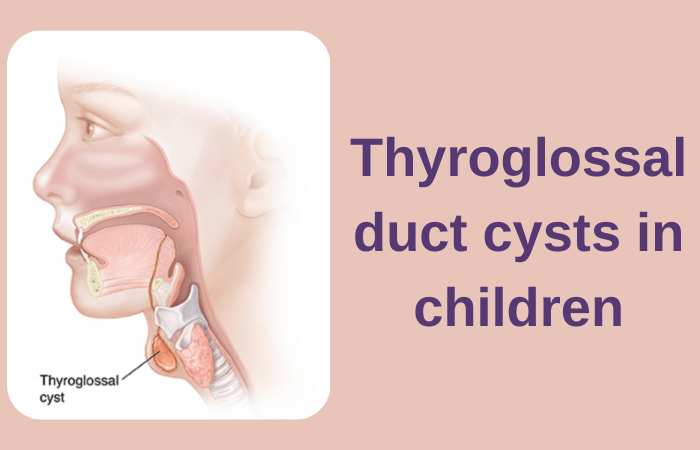
Overview
During fetal development, the thyroid gland begins near the base of the tongue and gradually moves downward into its normal position in the lower neck.
It travels along a temporary pathway called the thyroglossal duct.
Normally, this duct disappears once thyroid development is complete.
If part of the duct remains, it can form a pocket that fills with fluid or mucus and develops into a thyroglossal duct cyst.
The cyst most commonly appears as a midline neck mass near the hyoid bone.
It may remain unnoticed for years and then become more obvious as it enlarges or becomes inflamed.
A congenital cyst arising from a persistent thyroglossal duct
Usually presents as a midline mass in the front of the neck
Clinical examination with ultrasound commonly used for evaluation
Surgical removal with the Sistrunk procedure is standard treatment
What is a Thyroglossal Duct Cyst?
A thyroglossal duct cyst develops from tissue left behind along the developmental pathway of the thyroid gland.
Although the developmental abnormality is present from birth, the lump may not become noticeable until later in childhood.
The cyst can occur at different points along the route through which the thyroid descended, but it is most often located around the midline of the neck.
A typical cyst may be:
- Round or oval.
- Located in or close to the midline.
- Painless when not infected.
- Relatively mobile on examination.
A characteristic feature is that the lump may move upward when the child swallows or sticks out the tongue because of its anatomical attachment near the tongue base and hyoid bone.
Not every midline neck lump is a thyroglossal duct cyst, so appropriate evaluation is important.
How Does the Cyst Develop?
During early fetal development, the thyroid begins higher in the neck than its final position.
It descends through a temporary pathway called the thyroglossal duct.
The duct normally disappears after the thyroid reaches its usual location.
When it does not disappear completely, residual tissue may remain as:
- A closed cyst.
- A small tract through the neck tissues.
- Or, after infection or previous drainage, a sinus opening to the skin.
The remnant can remain unnoticed for a long period.
It may later fill with fluid or mucus, enlarge during an upper respiratory infection or become infected.
A thyroglossal duct cyst does not by itself mean that the thyroid gland is diseased.
Symptoms
The most common presentation is a lump or swelling in the front midline of the neck.
Parents may notice:
- A small lump below the chin or in the middle of the neck.
- Enlargement during a cold or throat infection.
- Movement of the lump when swallowing.
- Movement when the child sticks out the tongue.
- Little or no pain when the cyst is not infected.
When infection develops, symptoms can include:
- Rapid enlargement.
- Tenderness or pain.
- Redness over the cyst.
- Fever.
- Drainage of fluid or pus through a small opening in the skin in some cases.
An unusually large cyst can occasionally cause:
- Difficulty swallowing.
- A sense of pressure in the neck.
- Breathing difficulty in very large lesions.
Breathing difficulty or rapidly increasing neck swelling requires urgent medical assessment.
Infection
A thyroglossal duct cyst can become infected, and infection is sometimes the first event that makes the lump noticeable.
Inflammation may occur during or after:
- A throat infection.
- An upper respiratory infection.
- Or without an obvious trigger.
An infected cyst may become:
- Painful.
- Enlarged.
- Red.
- Warm and tender.
An abscess can occasionally develop, and a sinus may form that drains through the skin.
Definitive surgical removal is generally not performed while significant acute infection is active.
The infection is treated first with appropriate antibiotics according to the child's assessment.
A significant abscess may also require drainage in selected cases.
Definitive surgery is then planned after the inflammation has settled.
Diagnosis
Diagnosis begins with medical history and physical examination.
The clinician evaluates:
- Location of the mass.
- Size.
- Whether it is in the midline.
- Movement with swallowing.
- Movement when the tongue is extended.
- Tenderness or redness.
- Any skin opening or drainage.
- Previous episodes of swelling or infection.
Ultrasound is commonly used for further assessment.
It can help:
- Characterize the neck mass.
- Determine whether it is cystic.
- Assess nearby structures.
- Confirm that normal thyroid tissue is present in its expected location.
Confirming normal thyroid tissue is important because the cyst lies along the developmental pathway of the thyroid gland.
CT or MRI is not required routinely for every child.
Additional imaging may be considered when:
- The diagnosis is uncertain.
- The lesion is unusually large or deep.
- The anatomy is atypical.
- Another type of neck mass needs to be evaluated.
Thyroid-function blood tests may be used selectively depending on the history, examination and ultrasound findings rather than automatically being required for every uncomplicated case.
Why is Surgical Removal Recommended?
A thyroglossal duct cyst does not usually disappear spontaneously.
Even when it is small and painless, it can become infected later.
Repeated infection may cause:
- Recurrent pain and swelling.
- Abscess formation.
- Development of a draining sinus.
- Scar tissue and adhesions around the cyst.
- Greater difficulty during later surgery.
Surgical excision is therefore the usual definitive treatment once the diagnosis has been established and any active infection has resolved.
The aim is to remove both the cyst and the associated tract appropriately to reduce the chance of recurrence.
The Sistrunk Procedure
The standard operation for a thyroglossal duct cyst is called the Sistrunk procedure.
The operation involves more than simply removing the visible cyst.
The residual thyroglossal tract commonly passes through or closely around the hyoid bone in the upper neck.
The Sistrunk procedure therefore typically includes:
- Removal of the cyst.
- Removal of the associated tract.
- Removal of the central portion of the hyoid bone.
- Appropriate removal of tissue extending upward along the tract.
Simply removing the cyst without addressing the remaining tract has a greater risk of recurrence.
This is why the Sistrunk procedure is the standard surgical approach.
The operation is performed under general anesthesia through a neck incision.
Removed tissue is generally sent for pathological examination to confirm the diagnosis.
Before Surgery
Before surgery, the surgical team reviews the physical examination and ultrasound and confirms that any previous infection has settled.
Active infection is treated before definitive excision.
Parents should follow fasting instructions before anesthesia.
The medical team should also be informed if the child:
- Takes regular medication.
- Has medication allergies.
- Has a known bleeding problem.
- Develops fever.
- Develops a throat or respiratory infection.
- Develops new redness or pain around the cyst.
- Begins having drainage from the area.
- Has another chronic medical condition.
Before surgery, parents may discuss:
- Ultrasound findings.
- Confirmation of normal thyroid tissue.
- The Sistrunk procedure.
- Location of the incision.
- Wound closure.
- Pain management.
- Activity after surgery.
- Follow-up arrangements.
After Surgery and Follow-up
After the operation, the child is monitored during recovery until awake, breathing comfortably, able to swallow appropriately and pain is adequately controlled.
During early recovery, there may be:
- Mild to moderate discomfort around the incision.
- Limited swelling.
- A sensation of tightness in the neck.
Parents receive instructions regarding:
- Medication and pain relief.
- Wound care.
- Bathing.
- Activity.
- Return to school.
- Follow-up.
The skin may be closed with dissolvable stitches, surgical adhesive or another technique depending on the surgeon's approach.
The medical team should be contacted if the child develops:
- Significant fever.
- Increasing redness or swelling.
- Pus or abnormal drainage from the incision.
- Persistent bleeding.
- Severe or increasing pain despite medication.
- Separation of the wound.
- New or increasing neck swelling.
- Difficulty swallowing or breathing.
- A new lump developing in the same region after recovery.
Follow-up is used to confirm appropriate healing and monitor for recurrence.
Frequently Asked Questions
Is a thyroglossal duct cyst a cyst inside the thyroid gland?
No. It develops from remnants of the temporary tract through which the thyroid gland descended during fetal development. In most children, the normal thyroid gland is present separately in its usual position.
Where does a thyroglossal duct cyst usually appear?
It most commonly appears as a lump in or near the midline of the front of the neck, often close to the hyoid bone. The lump may move with swallowing or tongue protrusion.
Does my child need an ultrasound?
Ultrasound is commonly used to evaluate the mass, help characterize it and confirm that normal thyroid tissue is present in the expected location.
Can a thyroglossal duct cyst disappear without surgery?
It does not usually resolve on its own. The cyst can enlarge or become infected, so surgical removal is the usual definitive treatment after appropriate evaluation.
Can surgery be performed while the cyst is infected?
Active infection is generally treated first with appropriate antibiotics and other treatment when required. Definitive excision is then performed after the acute inflammation has settled.
What is the Sistrunk procedure?
It is the standard operation for a thyroglossal duct cyst. The cyst, associated tract and central portion of the hyoid bone are removed to reduce the chance that the cyst will return.
Why isn't the cyst simply removed by itself?
A residual tract commonly extends from the cyst through tissues around the hyoid bone. Leaving this tract behind increases the chance of recurrence, which is why the Sistrunk procedure removes the tract and central hyoid segment as well.
Can the cyst return after surgery?
Recurrence is possible, but appropriate removal using the Sistrunk technique reduces the likelihood compared with simple cyst excision. A new lump in the same area after recovery should be assessed.
Book Your Consultation
If you have noticed a midline neck lump in your child, particularly one that moves with swallowing or repeatedly becomes swollen or infected, you can book a consultation for assessment, appropriate imaging and treatment planning.
Video Presentation
Video presentation coming soon