Congenital Problems
Congenital problems are differences in the development of an organ or part of the body that arise while a baby is developing before birth. Some require observation only, while others may need pediatric surgical assessment or treatment after birth. Early evaluation helps define the condition and determine whether observation, planned treatment or urgent intervention is appropriate.
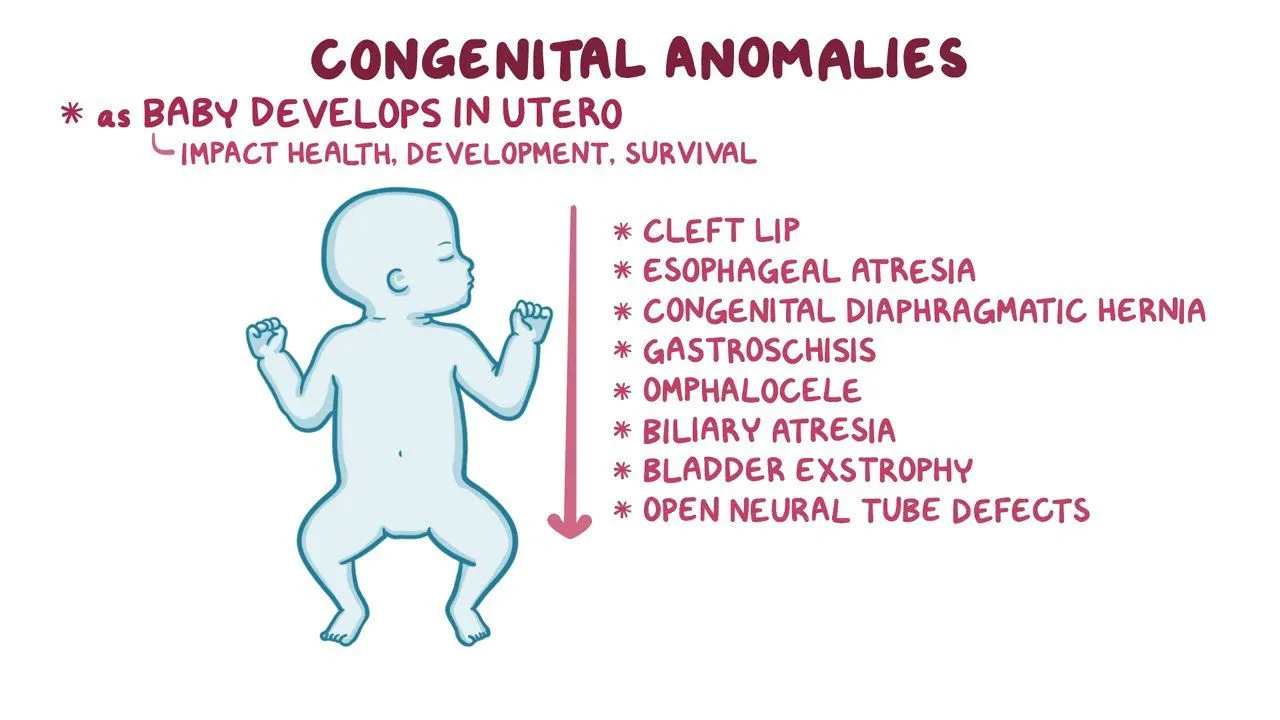
Overview
A baby's organs and body systems develop throughout pregnancy.
When part of the body does not develop in the usual way, the child may be born with a congenital difference affecting anatomy or function.
Congenital conditions can involve many areas, including the digestive system, abdominal wall, chest, neck and genitourinary system.
They vary greatly in severity.
Some conditions:
- Require observation only.
- Need a planned operation at an appropriate age.
- Require care from several medical specialties.
- Or may require prompt treatment after birth if breathing, feeding, intestinal function or another important organ is affected.
Assessment aims to establish the diagnosis and develop an individualized plan rather than assuming that every congenital condition requires surgery.
A developmental difference present from before birth
May be identified prenatally, after birth or later
Depends on the affected organ and severity
May involve observation, planned surgery or urgent care
What are Congenital Problems?
A congenital condition is an anatomical or developmental difference that is present from birth, even when its symptoms do not become apparent until later.
Some conditions develop because part of an organ does not form completely.
Others may result from:
- Incomplete fusion of developing tissues.
- Narrowing or blockage of a hollow organ such as the intestine.
- Failure of an organ to reach its normal position during fetal development.
- Formation of an abnormal channel or connection.
- Abnormal development of particular tissues or organs.
A congenital problem may involve a single organ or may form part of a more complex condition involving several body systems.
Having a congenital condition does not automatically mean that a genetic disorder is present, and many congenital conditions occur without a single identifiable cause.
Examples Requiring Pediatric Surgical Assessment
Pediatric surgeons assess a broad range of congenital conditions.
Examples that may require pediatric surgical evaluation include:
Gastrointestinal Conditions:
- Intestinal atresia or stenosis.
- Intestinal malrotation.
- Selected cases of Hirschsprung disease.
- Anorectal malformations.
- Other congenital gastrointestinal obstructions.
Abdominal Wall Conditions:
- Congenital abdominal wall defects.
- Certain congenital hernias.
Neck and Chest Conditions:
- Selected congenital cysts or masses of the neck.
- Certain congenital lung or chest abnormalities.
Other Conditions:
- Undescended testicle.
- Hypospadias.
- Selected congenital abnormalities affecting skin, soft tissues or other body regions.
This list is not exhaustive.
Some conditions require another surgical specialty or multidisciplinary management in addition to pediatric surgery.
When are Congenital Problems Detected?
Congenital conditions can be discovered at different stages.
During Pregnancy:
Some abnormalities can be identified during prenatal ultrasound examinations.
Prenatal diagnosis may help:
- Clarify the condition before delivery.
- Determine whether delivery at a specialized center is appropriate.
- Prepare for treatment that may be required soon after birth.
- Arrange involvement of additional specialists when necessary.
Immediately After Birth:
Some conditions become apparent during newborn examination.
Others may present with symptoms such as:
- Abnormal abdominal distension.
- Recurrent or green vomiting.
- Breathing difficulty.
- Feeding difficulty.
- Failure to pass stool normally.
- A visible mass or swelling.
- An obvious anatomical difference.
Later in Childhood:
Some congenital differences cause no symptoms during the newborn period and are identified later during growth or incidentally during examination or imaging for another reason.
Signs Requiring Urgent Assessment
Most congenital conditions are not medical emergencies, but certain symptoms in newborns and children require prompt assessment.
Important warning signs can include:
- Green or bilious vomiting.
- Severe or increasing abdominal distension.
- Failure to pass meconium or stool as expected together with other symptoms.
- Significant breathing difficulty.
- Inability to feed or keep down fluids.
- Persistent repeated vomiting.
- Severe abdominal pain.
- A painful or rapidly enlarging mass.
- Significant lethargy or reduced responsiveness.
- Signs of dehydration.
- Bluish discoloration or obvious respiratory distress.
- Unusual bleeding.
These symptoms do not necessarily mean that a congenital surgical condition is present, but they require medical assessment to determine the cause.
Diagnosis and Assessment
There is no single test for all congenital conditions.
Evaluation depends on the affected organ, the child's age and the symptoms present.
Assessment begins with review of:
- Pregnancy and birth history.
- Prenatal ultrasound or test results.
- The child's symptoms.
- Feeding and growth.
- Family history.
- Other medical conditions.
The child is then examined.
Depending on the condition, investigations may include:
- Ultrasound.
- Plain X-rays.
- Contrast imaging.
- CT.
- MRI.
- Blood tests.
- Endoscopy in selected circumstances.
- Genetic testing when clinically indicated.
- Assessment by other specialists.
Not every child requires every investigation.
Tests are selected to answer specific questions about diagnosis and treatment planning.
Treatment
There is no single treatment plan for congenital problems.
Management depends on:
- The diagnosis.
- The organ involved.
- Severity.
- The child's age.
- Symptoms.
- Effect on normal body function.
- Associated abnormalities or medical conditions.
Observation:
Some mild conditions do not require surgery and can be monitored as the child grows.
Planned Surgery:
Some conditions require surgical correction but do not need to be treated immediately.
The timing can then be selected according to the child's growth, condition and organ function.
Urgent Surgery:
Conditions causing obstruction or threatening the bowel, breathing or another important function may require rapid treatment.
Initial management may include intravenous fluids, gastric decompression, respiratory support or antibiotics depending on the condition.
Minimally Invasive Surgery:
Some congenital problems can be treated laparoscopically or thoracoscopically through small incisions.
Other conditions require open surgery.
The appropriate approach is determined by the diagnosis, the child's age and individual clinical situation rather than applying one technique to every condition.
Multidisciplinary Care
Some congenital conditions require expertise from more than one medical specialty.
Depending on the diagnosis, a child's care may involve:
- Neonatology.
- Pediatric surgery.
- Anesthesia.
- Radiology.
- Pediatric gastroenterology.
- Pediatric urology.
- Ear, nose and throat specialists.
- Cardiology.
- Genetics.
- Nutrition specialists.
- Other specialties when appropriate.
Involvement of several specialists does not automatically mean that a condition is severe.
The purpose is to ensure that all aspects of the child's health are considered when complex care is required.
Before Surgery
When surgery is required, preparation varies according to the diagnosis, age and general condition of the child.
Preparation may include:
- Anesthesia assessment.
- Blood tests when required.
- Review of imaging.
- Fasting.
- Intravenous fluids.
- Correction of dehydration or electrolyte abnormalities.
- Gastric decompression in some gastrointestinal obstructions.
- Antibiotics when appropriate.
- Assessment of associated heart, respiratory or other medical problems.
Parents should tell the medical team about:
- All medications.
- Known allergies.
- Previous bleeding problems.
- Previous operations.
- Previous problems with anesthesia.
- Any new fever, infection or illness.
Before surgery, the surgeon discusses:
- The diagnosis.
- Goal of the operation.
- Proposed approach.
- Alternatives when available.
- Potential risks.
- Feeding after surgery.
- Follow-up requirements.
After Surgery and Follow-up
Recovery varies substantially according to the congenital condition and the operation performed.
Some children require only a short period of postoperative observation.
Newborns with more complex conditions may need longer inpatient monitoring and supportive care.
Postoperative assessment may include:
- Breathing.
- Circulation.
- Pain.
- Return of bowel function.
- Ability to feed.
- Surgical wounds.
- Urination and bowel movements.
- Weight and growth.
- Signs of infection.
Feeding may not begin immediately after some gastrointestinal operations.
The surgical team determines when milk, fluids or food can be restarted and how feeding should be advanced.
After discharge, parents should follow instructions regarding:
- Medication.
- Wound care.
- Feeding.
- Bathing.
- Activity.
- Follow-up appointments.
Some congenital conditions require long-term follow-up to monitor growth and the function of the repaired organ.
The medical team should be contacted if the child develops:
- Significant fever.
- Recurrent or green vomiting.
- Severe or worsening pain.
- Significant abdominal distension.
- Breathing difficulty.
- Increasing wound redness, swelling or discharge.
- Inability to tolerate fluids.
- A major change in urination or bowel movements.
- Clear deterioration in general condition.
Frequently Asked Questions
Does every congenital problem require surgery?
No. Some congenital conditions require observation only, some need planned surgery, and others require prompt intervention. Treatment depends on the diagnosis and its effect on the child.
Can congenital problems be detected before birth?
Yes. Some conditions can be identified during pregnancy through ultrasound or other prenatal tests. Prenatal diagnosis can sometimes help plan delivery and treatment after birth.
Does a congenital condition mean my child has a genetic disorder?
Not necessarily. Some congenital abnormalities are associated with genetic conditions, while many occur without an identifiable syndrome or inherited cause. Genetic assessment is considered when clinically appropriate.
Is every condition discovered after birth congenital?
No. Congenital means that the condition developed before birth and was present from birth, even if symptoms were not recognized until later.
What tests are needed for a congenital condition?
It depends on the diagnosis. Some conditions can be assessed clinically, while others require ultrasound, X-rays, contrast studies, laboratory tests or more specialized investigations.
Can congenital problems be treated with minimally invasive surgery?
Some can be treated laparoscopically or thoracoscopically, while others require open surgery. The approach depends on the condition, age of the child and clinical situation.
Do all congenital problems need treatment immediately after birth?
No. Some require urgent treatment, while others can be observed or repaired electively at an appropriate stage of growth. Timing is determined by the condition and its effect on the child.
Is follow-up needed after congenital surgery?
It depends on the diagnosis. Some children need only short-term follow-up, while others require longer monitoring of growth, organ function and potential problems that may appear as they develop.
Book Your Consultation
If your child has been diagnosed with a congenital condition during pregnancy or after birth, or has findings that may require pediatric surgical assessment, you can book a consultation to understand the condition and determine the appropriate investigations and treatment plan.
Video Presentation
Video presentation coming soon