Hypospadias
Hypospadias is a congenital condition in which the opening of the urethra is located on the underside of the penis instead of at its usual position at the tip. Severity varies between children and the condition may be associated with penile curvature or an abnormal foreskin appearance. Early assessment helps determine whether surgical repair is needed.
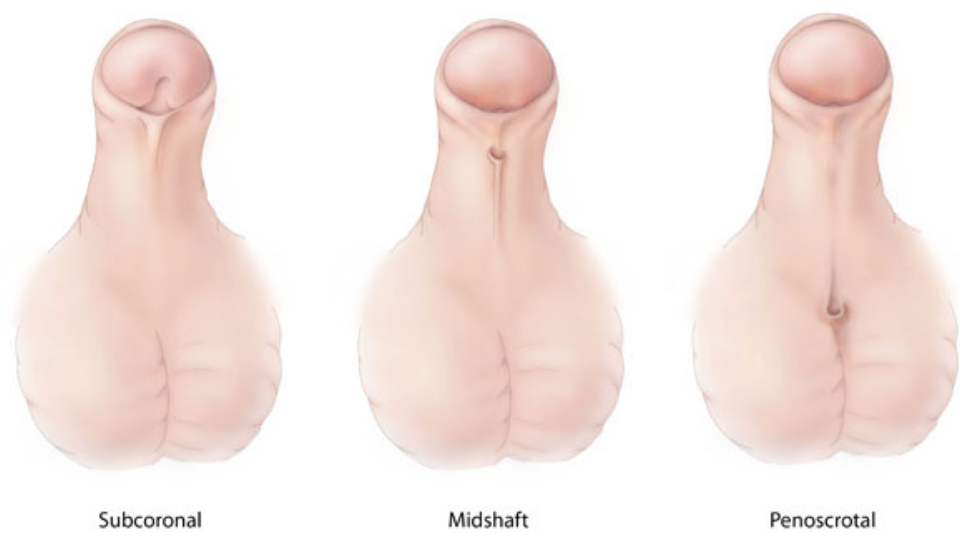
Overview
During normal fetal development, the urethra forms so that its opening reaches the tip of the penis.
In hypospadias, the urethral opening remains on the underside of the penis at a variable distance from the tip.
In mild cases, the opening may be very close to the normal position. In more significant cases, it may be located along the penile shaft, near the base of the penis or close to the scrotum.
Hypospadias may also be associated with:
• Downward penile curvature.
• A hooded or incomplete foreskin.
• An abnormal or spraying urinary stream.
Not every case is the same. Treatment decisions depend on the location of the urethral opening, degree of curvature, penile function and the anatomy available for reconstruction.
The urethral opening is located on the underside of the penis
Usually identified by physical examination after birth
Primary repair is commonly performed between 6 and 18 months when needed
Avoid routine circumcision before specialist assessment
What is Hypospadias?
Hypospadias is a congenital difference in the development of the urethra and penis in which the urinary opening is positioned below its normal location at the tip.
The severity varies according to the location of the opening.
Cases can broadly involve:
• An opening near the head of the penis.
• An opening along the penile shaft.
• An opening near the base of the penis or penoscrotal region.
The position of the meatus alone does not determine how complex the condition is.
The surgeon also considers penile curvature, the shape of the glans, the urethral plate and the tissues available for reconstruction.
Some very mild forms that do not interfere with urination or penile function may not require surgery. This decision is made after specialist assessment.
Associated Features
Parents or clinicians may notice one or more of the following:
• The urethral opening is below the normal position.
• Urine sprays or travels in an unusual direction.
• The penis curves downward.
• The foreskin forms a hood over the upper surface of the glans and is incomplete underneath.
• The shape of the glans appears different.
Hypospadias is usually identified during examination after birth.
When severe hypospadias occurs together with one or both testicles being non-palpable or absent from the scrotum, further specialist assessment may be required to evaluate genital development more broadly.
Diagnosis
Diagnosis is primarily based on physical examination.
The clinician assesses:
• The position of the urethral opening.
• Glans anatomy.
• Distribution of the foreskin.
• Presence and degree of penile curvature.
• Penile size and available tissues.
• Whether both testicles are present in the scrotum.
• Any associated congenital abnormalities.
Isolated hypospadias usually does not require imaging simply to confirm the diagnosis.
Children with severe forms or additional abnormalities may require further investigations according to the findings and specialist assessment.
Treatment & Why Circumcision Should Wait
Treatment:
Treatment depends on the severity of hypospadias and its expected effect on urination, penile function and appearance.
Some very mild forms may not require surgery when the urethral opening is close to the normal position and there is no significant functional problem or curvature.
When surgical repair is required, the goals are to:
• Correct significant penile curvature when present.
• Reconstruct an appropriately sized urethral channel.
• Bring the urinary opening toward the normal position at the glans.
• Achieve good urinary function.
• Reconstruct appropriate glans and penile skin coverage.
Several surgical techniques are available and no single operation is appropriate for every child.
The surgical approach depends on:
• Location of the urethral opening.
• Degree of penile curvature.
• Urethral plate anatomy.
• Glans anatomy.
• Tissue available for reconstruction.
Primary repair is commonly performed between 6 and 18 months of age when surgery is indicated.
Many cases can be repaired in a single operation, while more complex forms may require staged reconstruction.
Why Circumcision Should Wait:
If hypospadias is present or suspected, routine circumcision should not be performed before specialist assessment.
Foreskin tissue may be useful during reconstruction of the urethra in some cases.
Preserving the foreskin until the child has been assessed therefore gives the surgeon the full range of reconstructive options.
Parents who notice an abnormal position of the urinary opening or an unusual penile appearance should seek specialist assessment before circumcision.
Before Surgery
Before hypospadias repair, the surgeon evaluates the anatomy and severity of the condition and develops an individual reconstructive plan.
Parents should follow the medical team's instructions regarding fasting and medications before anesthesia.
The medical team should be informed if the child:
• Takes regular medication.
• Has medication allergies.
• Has a known bleeding disorder.
• Develops fever, infection or a new illness before surgery.
• Has another medical condition that may affect anesthesia or surgery.
Before the procedure, parents may discuss:
• The severity of the hypospadias.
• Whether penile curvature is present.
• The proposed surgical technique.
• Whether repair is expected to require one or more stages.
• Whether a urinary catheter or stent will be used.
• Wound care.
• Follow-up after surgery.
After Surgery and Follow-up
After hypospadias repair, parents receive instructions regarding wound care, medication and activity.
A small urinary catheter or stent may be left temporarily after some types of repair, depending on the surgical technique.
Some swelling, bruising or discomfort around the surgical area may occur during the early recovery period.
Parents should follow instructions regarding:
• Dressing and wound care.
• Care of the catheter or stent if present.
• Medication and pain relief.
• Bathing.
• Diaper care.
• Activities that should temporarily be avoided.
The medical team should be contacted if the child develops:
• Persistent or increasing bleeding.
• A significant fever.
• Increasing redness or swelling.
• Abnormal wound discharge.
• Severe or worsening pain despite prescribed treatment.
• Failure of urine to drain through the catheter when one is present.
• Significant difficulty urinating after catheter removal.
Follow-up is important because some complications of hypospadias repair may not become apparent immediately.
Problems monitored during follow-up can include:
• A urethrocutaneous fistula causing urine to leak through an abnormal opening.
• Narrowing of the urethral opening or reconstructed urethra.
• Breakdown of part of the repair.
• Persistent or recurrent penile curvature.
• Changes in the direction or strength of the urinary stream.
Assessment later in childhood, after toilet training and sometimes around puberty may be useful to ensure that urinary and penile function remain satisfactory as the child grows.
Frequently Asked Questions
Does every child with hypospadias need surgery?
No. Some very mild forms may not require repair when the opening is close to the normal position and there is no significant functional problem or penile curvature. The need for surgery is determined after specialist assessment.
When is hypospadias surgery usually performed?
When repair is required, primary surgery is commonly performed between 6 and 18 months of age. The exact timing is individualized according to the child's health and the severity of the condition.
Can a child with hypospadias be circumcised?
Routine circumcision should generally wait until specialist assessment because foreskin tissue may be useful during surgical reconstruction.
Can hypospadias be repaired in one operation?
Many forms can be repaired in a single procedure. More severe or complex forms may require staged reconstruction. The approach depends on the position of the opening, curvature and available tissues.
Can hypospadias affect urination?
Yes. Depending on the location of the urethral opening, the urinary stream may spray or be directed abnormally. The degree of functional impact varies between children.
Will my child need a catheter after surgery?
A temporary urinary catheter or stent is used after some types of hypospadias repair to protect the reconstructed urethra while it heals. Whether one is required and how long it remains depends on the surgical technique.
Can complications occur after hypospadias repair?
As with any reconstructive surgery, complications can occur. These may include fistula formation, narrowing of the urinary opening or urethra, breakdown of part of the repair or recurrent curvature. Follow-up helps identify and manage these problems if they occur.
Is long-term follow-up needed?
Follow-up is important to assess healing and urinary function. Assessment after toilet training and at later stages of growth may also help identify problems that become apparent as the child develops.
Book Your Consultation
If you have noticed that your child's urinary opening is not in its usual position, or there is penile curvature or an unusual penile appearance, you can book a consultation to assess the severity of hypospadias and determine whether treatment is needed.