Appendicitis
Appendicitis is inflammation and infection of the appendix, a small structure connected to the large intestine. It commonly causes abdominal pain that becomes worse with time and may be accompanied by loss of appetite, vomiting or fever. Suspected appendicitis in a child requires prompt assessment because delay can lead to perforation and infection spreading within the abdomen.
Overview
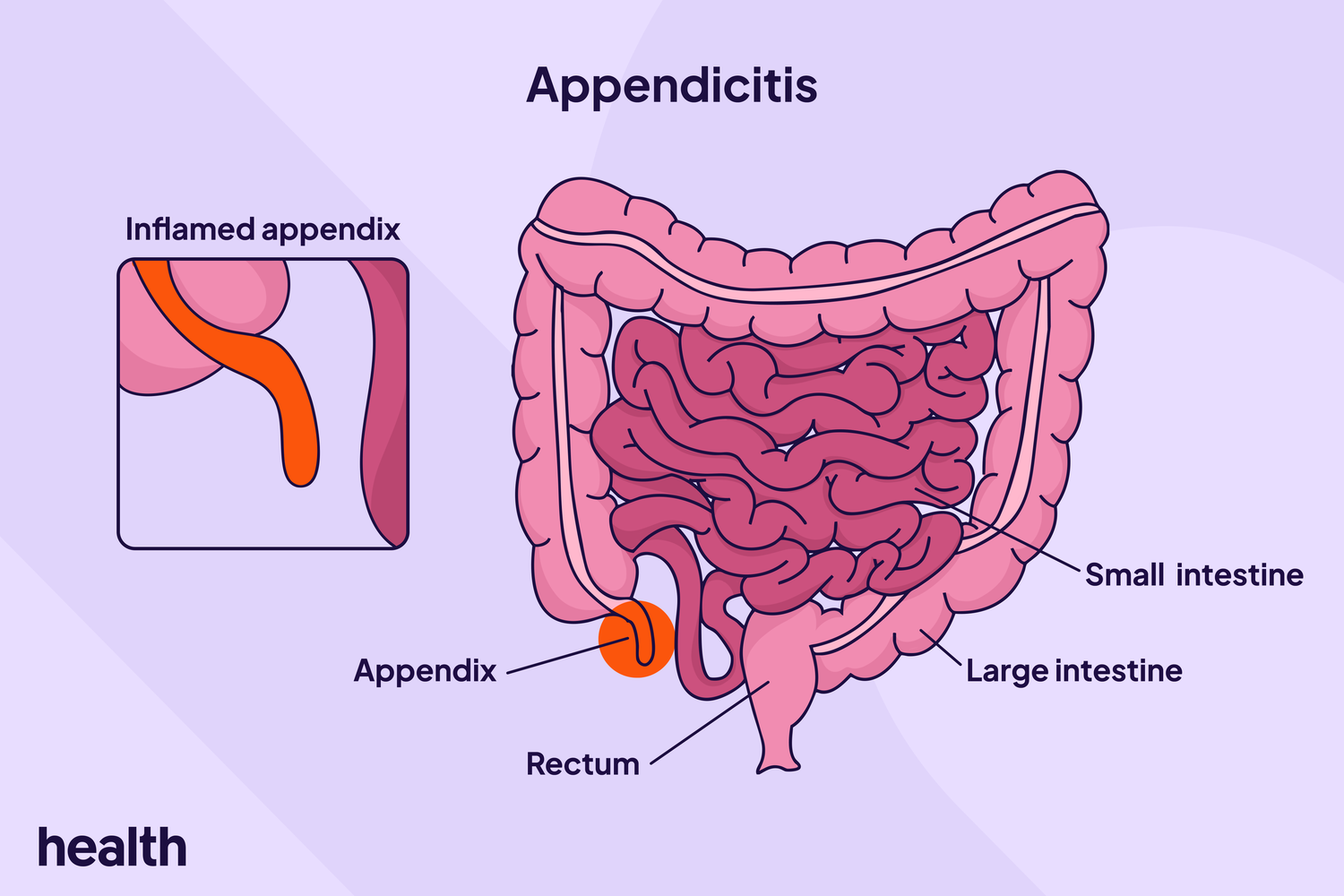
The appendix is a small tube connected to the beginning of the large intestine, usually located in the lower right side of the abdomen.
Appendicitis develops when the appendix becomes blocked, swollen and inflamed, allowing infection to develop.
Without treatment, pressure and inflammation can eventually cause a hole, or perforation, in the appendix.
When perforation occurs, infection can spread inside the abdomen and may cause peritonitis or an abscess.
Symptoms vary between children, particularly in younger age groups, so appendicitis cannot be diagnosed from one symptom alone.
A child with symptoms concerning for appendicitis should receive prompt medical assessment.
Inflammation and infection of the appendix
Abdominal pain that often worsens over time
Examination supported by tests and imaging when needed
Depends on severity and whether complications are present
What is Appendicitis?
Appendicitis is inflammation and infection of the appendix.
The condition commonly begins when the inside of the appendix becomes blocked. The obstruction may be associated with hardened stool or mucus, or swelling of tissue.
Pressure then increases inside the appendix, bacteria multiply and inflammation develops.
If the process continues, the wall of the appendix can weaken and perforate, allowing infection to spread into the abdominal cavity.
Appendicitis can occur at different ages but is more common in school-aged children and adolescents than in infants.
Symptoms
Symptoms of appendicitis vary from child to child.
Common features can include:
• Abdominal pain.
• Pain that begins around the belly button and later moves to the lower right side in many children.
• Pain that becomes worse with walking, movement, coughing or jumping.
• Loss of appetite.
• Nausea or vomiting.
• Fever.
• Diarrhea or constipation in some children.
• A child who appears tired or generally unwell.
Not every child develops the classic pattern.
Symptoms can be less specific in younger children, so persistent or worsening abdominal pain associated with vomiting, fever or a clear change in the child's condition should be assessed.
When is Urgent Assessment Needed? & Diagnosis
When is Urgent Assessment Needed?
Appendicitis requires prompt medical evaluation.
Urgent assessment is important when a child develops:
• Abdominal pain that continues to worsen.
• Significant pain in the lower right abdomen.
• Pain that makes normal walking or movement difficult.
• Repeated vomiting together with abdominal pain.
• Fever associated with persistent abdominal pain.
• Increasing abdominal swelling.
• Marked lethargy or deterioration in general condition.
• Severe pain spreading across the abdomen.
• Inability to tolerate or keep down fluids.
If appendicitis is suspected, medical evaluation should not be delayed simply to wait and see whether the symptoms disappear.
Diagnosis:
Diagnosis begins with the history of the symptoms, how the pain has developed and a physical examination of the abdomen.
Laboratory tests may be used to support the assessment, including:
• Complete blood count.
• Inflammatory markers.
• Urinalysis to assess for other causes of abdominal pain.
• Additional tests according to the child's age and symptoms.
Imaging may also be used to help confirm the diagnosis.
Ultrasound is commonly used when appendicitis is suspected in children.
If the result remains uncertain, additional imaging such as MRI or CT may sometimes be required according to the examination findings and clinical assessment.
No single test diagnoses appendicitis in every child. The medical team combines the history, examination, laboratory findings and imaging when deciding whether appendicitis is present.
Treatment
Treatment depends on the child's clinical condition and whether the appendicitis is uncomplicated or has progressed to perforation, an abscess or more widespread infection.
Children are commonly given intravenous fluids when needed, pain relief and antibiotics.
For most children, the standard treatment is removal of the appendix, called an appendectomy.
Appendectomy can often be performed laparoscopically through small abdominal incisions. Open surgery may be used in some circumstances depending on the child's condition and the extent of infection.
For selected children with uncomplicated appendicitis, a specialist team may discuss treatment with antibiotics without immediate surgery.
Non-operative treatment is not suitable for every child and requires careful selection and follow-up. Appendicitis can also recur after antibiotic-only treatment.
Management can be different when the appendix has perforated or an abscess or inflammatory mass has developed.
Treatment may then include:
• Intravenous antibiotics.
• Drainage of an abscess when appropriate.
• Appendectomy during the same admission or at a later stage depending on the clinical situation and response to treatment.
The pediatric surgical team determines the most appropriate plan according to the examination, imaging and the child's overall condition.
Before Surgery
When appendectomy is planned, the child is prepared for anesthesia and treatment is started for dehydration or infection when needed.
The child is usually asked not to eat or drink while preparing for surgery.
Preparation may include:
• Intravenous fluids.
• Antibiotic.
• Pain medication.
• Review of laboratory and imaging results.
• Assessment for anesthesia.
Parents should tell the medical team about:
• Regular medications.
• Medication allergies.
• Chronic medical conditions.
• Any known bleeding problem.
• Previous operations or problems with anesthesia.
The surgeon discusses the condition of the appendix, the proposed procedure and whether there is evidence of perforation or another complication.
After Surgery and Follow-up
Recovery after appendectomy depends significantly on whether the appendix was inflamed without perforation or whether perforation and abdominal infection were present.
After surgery, the medical team monitors:
• Pain.
• Temperature.
• Ability to drink and eat.
• Mobility.
• Surgical wounds.
• Signs of infection.
After uncomplicated appendicitis, a child may be able to go home once clinically well, able to drink and eat, move comfortably and have pain controlled with oral medication.
Children with perforated appendicitis or more extensive infection may require a longer period of observation, antibiotics and recovery.
After discharge, parents should follow the surgeon's instructions regarding wound care, bathing, activity and return to school or sports.
The medical team should be contacted if the child develops:
• Persistent or new fever.
• Increasing rather than improving abdominal pain.
• Repeated vomiting or inability to keep down fluids.
• Significant abdominal swelling.
• Increasing redness, swelling or drainage from an incision.
• A clear deterioration in the child's condition.
• Any new symptom that causes concern.
The treating team's postoperative instructions should always take priority for the individual child.
Frequently Asked Questions
Where does appendicitis pain occur in children?
In many children, pain begins around the belly button and later moves to the lower right side of the abdomen and becomes progressively worse. However, not every child develops this classic pattern, particularly younger children.
Does vomiting with abdominal pain mean my child has appendicitis?
Not necessarily. Abdominal pain and vomiting have many causes. Persistent or worsening pain, particularly when accompanied by fever, loss of appetite or lower right abdominal tenderness, should be medically assessed.
How is appendicitis diagnosed?
Diagnosis is based on the child's symptoms and physical examination, supported when necessary by blood and urine tests and imaging such as ultrasound. Additional imaging may be required when the diagnosis remains uncertain.
Can ultrasound always diagnose appendicitis?
No. Ultrasound is an important and commonly used test in children, but the appendix cannot always be clearly visualized. If clinical concern remains, the medical team determines whether further investigation or imaging is needed.
Does every child with appendicitis require surgery?
Appendectomy remains the standard treatment for most children. In carefully selected cases of uncomplicated appendicitis, antibiotic treatment without immediate surgery may be considered by a specialist team. This approach is not appropriate for every child and recurrence can occur.
What happens if the appendix perforates?
Perforation can allow infection to spread within the abdomen or form an abscess. Treatment may require intravenous antibiotics, surgery, abscess drainage or a staged treatment plan depending on the individual clinical situation.
Can an appendectomy be performed laparoscopically?
Yes. Many appendectomies in children are performed laparoscopically through small incisions. Open surgery may still be appropriate in certain circumstances.
Can my child live normally without an appendix?
Yes. Children can live normally after appendectomy, and removal of the appendix does not prevent the digestive system from functioning normally.
Book Your Consultation
If your child has persistent or worsening abdominal pain and symptoms that raise concern for appendicitis, prompt medical assessment is important to determine the cause and appropriate treatment.