Intestinal Obstruction
Intestinal obstruction occurs when the normal passage of food, fluid, gas and intestinal contents is partially or completely blocked. It can result from congenital conditions in newborns or acquired problems in older children. Some forms require urgent treatment to protect the bowel and prevent serious complications.
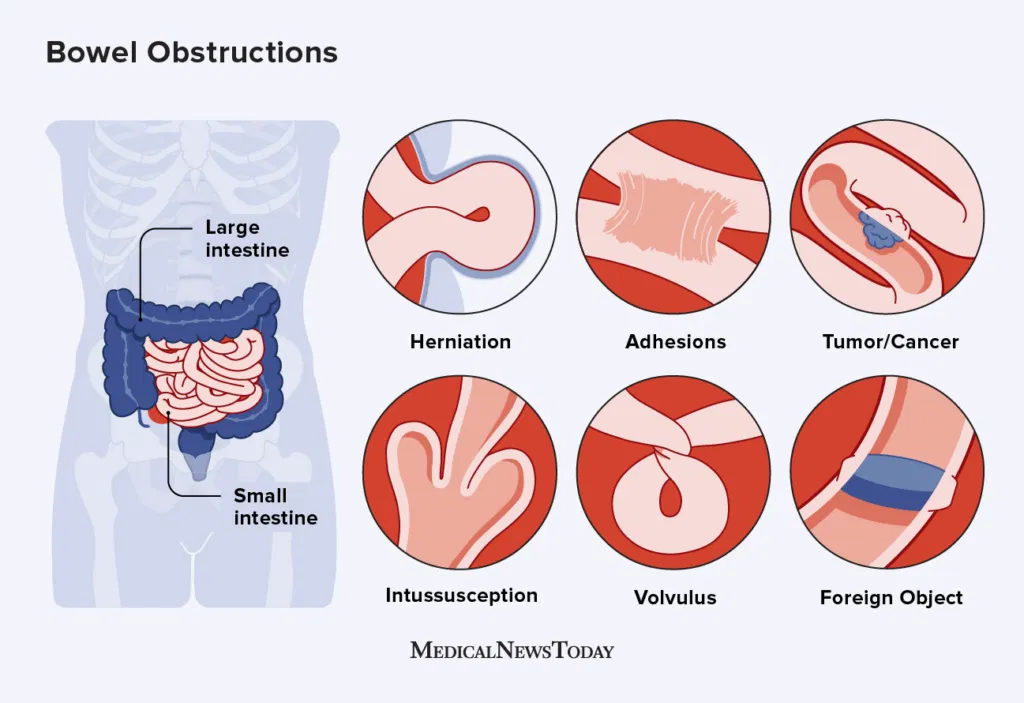
Overview
The intestines continuously move food, fluid, gas and waste through the digestive tract.
When something prevents this movement, intestinal contents accumulate above the obstruction and the bowel can become distended.
An obstruction may be:
- Partial, allowing some contents to pass.
- Complete, with little or no passage through the affected area.
It may involve either the small or large intestine.
The causes vary substantially with age.
Some children are born with an intestinal blockage because of abnormal development. Others develop obstruction later because of intussusception, bowel twisting, postoperative adhesions, an incarcerated hernia or other conditions.
Identifying the cause promptly is important because some forms of obstruction can compromise the blood supply to the bowel and cause intestinal injury.
Partial or complete blockage of intestinal contents
Vomiting, abdominal distension, pain and changes in bowel movements
Examination and age-appropriate imaging
Depends on the cause, severity and condition of the bowel
What is Intestinal Obstruction?
Intestinal obstruction means that something prevents digestive contents from moving normally through the intestine.
The obstruction may be mechanical, meaning a physical problem is blocking or compressing the bowel.
Other conditions can produce obstruction-like symptoms because intestinal movement becomes severely impaired without a physical blockage.
With mechanical obstruction, fluid and gas accumulate above the blocked area and the bowel becomes increasingly distended.
Some causes, particularly twisting or trapping of the bowel, can also compress the blood vessels supplying the affected segment.
If blood supply is compromised, the bowel can become damaged, perforate and allow infection to spread within the abdomen.
The severity therefore varies considerably, but suspected acute intestinal obstruction requires timely medical assessment.
Causes in Children
The causes of intestinal obstruction vary according to the child's age and medical history.
In newborns and young infants, possible causes include:
- Congenital intestinal atresia or stenosis.
- Intestinal malrotation, which may be complicated by volvulus.
- Hirschsprung disease in some cases.
- Meconium-related obstruction in some newborns.
- Other congenital abnormalities of the gastrointestinal tract.
In infants and older children, causes may include:
- Intussusception, in which one section of bowel slides inside another.
- Adhesions following previous abdominal surgery.
- An incarcerated hernia.
- Twisting of a segment of intestine.
- Inflammation or narrowing of the bowel.
- Less common masses or other causes.
A history of previous abdominal surgery is particularly important because postoperative adhesions can cause bowel obstruction months or even years later.
Symptoms
Symptoms depend on the location and cause of the obstruction, the child's age and whether the blockage is partial or complete.
Possible symptoms include:
- Vomiting.
- Green or bilious vomiting.
- Abdominal distension.
- Abdominal pain or cramping.
- Recurrent episodes of severe crying in an infant.
- Failure to pass stool or gas.
- A significant change in bowel movements.
- Poor appetite or refusal to feed.
- Lethargy.
- Signs of dehydration.
Some conditions have particular patterns.
With intussusception, severe episodes of pain may come and go, and a child may pull the legs toward the abdomen during an episode.
A newborn with congenital obstruction may develop early vomiting or abdominal distension and may fail to pass stool as expected.
Green bilious vomiting in a newborn or infant requires urgent medical assessment to exclude intestinal obstruction or volvulus.
When is it an Emergency?
Certain causes of intestinal obstruction can compromise blood flow to the bowel in a short period of time.
Urgent medical assessment is needed if a child develops:
- Green or bilious vomiting.
- Severe or persistent abdominal pain.
- Recurrent episodes of intense pain.
- Increasing abdominal distension.
- Repeated vomiting with inability to keep down fluids.
- Failure to pass stool or gas together with vomiting or distension.
- Blood in the stool.
- Marked lethargy or a significant change in responsiveness.
- Pallor or rapid deterioration in general condition.
- Signs of dehydration.
- Fever associated with severe abdominal pain or distension.
When acute obstruction is suspected, food, laxatives or home treatments should not be used to delay medical assessment.
Diagnosis
Assessment begins with the child's symptoms, age, surgical history and details about the onset of vomiting, pain and bowel changes.
Physical examination includes assessment of:
- Abdominal distension.
- Areas of tenderness.
- Possible abdominal masses or hernias.
- Bowel sounds.
- Hydration.
- The child's overall clinical condition.
Blood tests may be required to assess:
- Dehydration and electrolyte abnormalities.
- Infection or inflammation.
- Effects on other organs.
- General condition before a procedure or operation.
The imaging used depends on the suspected cause.
It may include:
- Plain abdominal X-rays.
- Ultrasound, particularly for conditions such as intussusception.
- Contrast studies of the gastrointestinal tract in selected situations.
- CT scanning in selected older children or unclear cases.
- Other studies according to the child's age and clinical condition.
The goal is not only to confirm obstruction but also to identify its location and cause and look for evidence that the bowel or its blood supply is threatened.
Treatment
There is no single treatment for every intestinal obstruction.
Management depends on:
- The underlying cause.
- Location of the obstruction.
- Whether it is partial or complete.
- The child's clinical condition.
- Whether intestinal blood flow appears compromised.
- Whether perforation or abdominal infection is present.
Initial treatment may include:
- Temporarily stopping oral feeding.
- Intravenous fluids to treat dehydration and electrolyte abnormalities.
- A nasogastric tube to remove accumulated fluid and gas and reduce vomiting and distension.
- Pain relief and other supportive treatment.
- Antibiotics when perforation, infection or a surgical condition makes them appropriate.
Some causes can be treated without surgery.
For example, many cases of intussusception can be treated with an air or liquid enema performed under imaging guidance when the child is an appropriate candidate.
Some adhesive bowel obstructions after previous surgery may initially be managed without an operation when there is no evidence that the bowel is strangulated or requires urgent surgery.
Other causes require surgery.
Examples include:
- Certain congenital intestinal obstructions.
- Volvulus threatening the intestinal blood supply.
- An incarcerated hernia that cannot be managed otherwise.
- Intussusception that cannot be reduced non-operatively or is complicated.
- Persistent obstruction that does not improve with conservative treatment.
- Damaged or perforated bowel.
During surgery, the surgeon treats the underlying cause and restores passage through the intestine whenever possible.
If a segment of bowel has been irreversibly damaged, it may need to be removed and the healthy ends reconnected.
The exact operation therefore depends on what has caused the obstruction.
Before Surgery
When surgery is required, preparation often begins during the initial treatment of the obstruction.
This may include:
- Stopping food and fluids by mouth.
- Intravenous fluids.
- Correction of dehydration and electrolyte abnormalities.
- Nasogastric decompression when required.
- Antibiotics in appropriate cases.
- Review of imaging and laboratory tests.
- Assessment for anesthesia.
Parents should tell the medical team about:
- Previous abdominal operations.
- Regular medications.
- Medication allergies.
- Chronic medical conditions.
- Known bleeding problems.
- Previous problems with anesthesia.
The surgeon discusses the suspected cause and planned treatment with the family.
In some cases, however, every detail of the intestinal problem cannot be known until the bowel is examined during the operation.
After Surgery and Follow-up
Recovery after surgery for intestinal obstruction varies substantially depending on the cause, the condition of the bowel and the operation performed.
After surgery, the team monitors:
- Vital signs.
- Pain.
- Abdominal distension.
- Passage of gas and stool.
- Return of bowel function.
- Surgical wounds.
- Ability to restart feeding.
- Signs of infection.
A nasogastric tube may remain in place after some operations until bowel function begins to recover.
Feeding does not always restart immediately after surgery.
The surgical team decides when to begin fluids and food and how quickly to advance feeding according to bowel function and the child's condition.
Some children require temporary nutritional support through a vein or feeding tube, particularly after more complex operations.
After discharge, parents should follow instructions regarding:
- Wound care.
- Feeding.
- Medication.
- Activity.
- Bathing.
- Return to school.
- Follow-up appointments.
The medical team should be contacted if the child develops:
- Recurrent or green vomiting.
- Increasing abdominal distension.
- Severe or worsening pain.
- Significant fever.
- Increasing redness, swelling or drainage from the wound.
- Inability to tolerate fluids.
- Significant bowel changes together with other symptoms.
- Lethargy or clear deterioration in general condition.
New symptoms of obstruction should also be assessed in the future, particularly in a child who has previously undergone abdominal surgery.
Frequently Asked Questions
Does every intestinal obstruction require surgery?
No. Treatment depends on the cause and the child's condition. Some cases, including certain intussusceptions and some adhesive bowel obstructions, can be treated without surgery. Other causes require urgent surgical treatment.
Why is green vomiting important?
Green vomit may contain bile and can be a sign of intestinal obstruction, particularly in a newborn or young infant. It therefore requires prompt medical assessment.
How is intestinal obstruction diagnosed?
Diagnosis begins with symptoms and physical examination. Imaging is selected according to the child's age and suspected cause and may include abdominal X-rays, ultrasound, contrast studies or CT in selected cases.
What is intussusception?
Intussusception occurs when one segment of intestine slides inside the adjacent segment, causing obstruction and potentially affecting its blood supply. Many cases can be treated with an image-guided air or liquid enema, while some require surgery.
Can previous surgery cause bowel obstruction?
Yes. Adhesions can form inside the abdomen after an operation and may later cause intestinal obstruction. Some adhesive obstructions improve with non-operative management, while others require surgery.
Why is a tube placed through the nose into the stomach?
A nasogastric tube removes accumulated fluid and gas from the upper digestive tract. This can reduce vomiting, distension and pressure while the obstruction is being treated.
What happens if the bowel loses its blood supply?
A bowel segment can become severely damaged if obstruction or twisting cuts off its blood supply. This is an emergency and may require urgent surgery. Irreversibly damaged bowel may need to be removed.
Can intestinal obstruction return after treatment?
It depends on the cause. Some problems are definitively corrected, while conditions such as postoperative adhesions can cause another obstruction in the future. New vomiting, distension or significant abdominal pain should be assessed.
Book Your Consultation
If your child has recurrent vomiting, abdominal distension or abdominal pain associated with changes in bowel movements, you can book a consultation to assess the cause. Green vomiting, severe pain or rapid deterioration requires urgent medical assessment.
Video Presentation
Video presentation coming soon