Hernia Repair
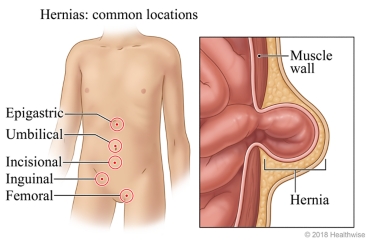
A hernia in a child occurs when tissue or part of the intestine pushes through an opening or weak area in the abdominal wall. Inguinal and umbilical hernias are among the most common types in children, and their management differs according to the type of hernia, the child's age and associated symptoms.
Overview
A hernia is a bulge caused by abdominal contents passing through an opening or weak area in the abdominal wall.
Two common types in children are:
• Inguinal hernia, which appears in the groin and may extend into the scrotum in boys or the labial area in girls.
• Umbilical hernia, which appears as a bulge at the belly button.
Although both are called hernias, their management is different.
An inguinal hernia is not expected to close on its own and usually requires surgical repair after diagnosis because abdominal contents can become trapped.
Most uncomplicated umbilical hernias, however, close naturally as the child grows and can often be observed when there are no symptoms or complications.
Inguinal and umbilical hernias
Usually based on physical examination
Usually requires surgical repair
Many close naturally as the child grows
What is a Hernia in Children?
A hernia develops when an opening allows tissue or an organ from inside the abdomen to protrude outside its normal position.
In an inguinal hernia, the problem is usually related to a small channel between the abdomen and groin that remains open after birth.
A loop of intestine may pass through this opening, and other tissues may also enter the hernia depending on the child's sex and anatomy.
An umbilical hernia occurs when the muscles around the belly button do not close completely after birth, allowing a bulge to appear at the umbilicus, particularly when the child cries, coughs or strains.
Hernias in children differ from many adult hernias, and the surgical approach therefore also differs.
Common Types of Hernia
Inguinal Hernia:
An inguinal hernia usually appears as a bulge or swelling in the groin.
The swelling may come and go and often becomes more noticeable when the child cries, coughs or strains.
In boys, the hernia may extend into the scrotum. In girls, swelling may appear in the groin or labial area.
Once an inguinal hernia is diagnosed, surgical assessment and repair are generally recommended because the hernia does not close spontaneously and abdominal contents can become incarcerated.
Umbilical Hernia:
An umbilical hernia appears as a bulge at the belly button and may become more prominent when the child cries or strains.
Most umbilical hernias cause no problems, and many close naturally during the first several years of life.
An uncomplicated umbilical hernia can often be observed. Surgery may be considered if it remains open as the child gets older or if symptoms or complications develop.
Symptoms and Diagnosis
Most hernias in children are diagnosed by physical examination.
Parents may notice:
• A lump or bulge in the groin.
• Swelling extending into the scrotum in some boys.
• A bulge at the belly button.
• Increased prominence when the child cries, coughs or strains.
• A bulge that becomes smaller or disappears when the child is relaxed or lying down.
A hernia may not be visible all the time. It can therefore be useful to tell the doctor when the swelling appears and what it looks like.
If the bulge does not appear during the appointment, a clear photograph taken when it is visible may sometimes help the assessment.
Imaging is not required in every case. The doctor may request imaging when the diagnosis is uncertain or another cause of swelling needs to be considered.
When is a Hernia an Emergency? & Treatment
When is a Hernia an Emergency?
Hernia contents can sometimes become trapped and cannot return to the abdomen. This is called incarceration.
If the blood supply to the trapped tissue becomes compromised, strangulation may occur. This requires urgent medical assessment and treatment.
Urgent medical attention is needed if the child develops:
• A painful or firm bulge that no longer disappears as it previously did.
• Severe pain or unusual persistent crying.
• Repeated vomiting.
• Abdominal swelling.
• Redness or abnormal discoloration over the hernia.
• Significant tenderness over the swelling.
• A child who appears increasingly unwell or refuses feeds.
A painful or firm hernia should not be forcefully pushed back into the abdomen at home.
Treatment:
Treatment depends on the type of hernia.
Inguinal Hernia:
Surgical repair is the standard treatment for an inguinal hernia in children.
During surgery, the hernia contents are returned to the abdomen and the opening through which they passed is closed.
Repair may be performed through a small open groin incision or laparoscopically in selected cases. The surgeon determines the most appropriate approach for each child.
Umbilical Hernia:
Most uncomplicated umbilical hernias can be observed during the early years because many close naturally.
Surgery may be considered when the hernia remains open beyond the age when spontaneous closure is expected, is unusually large, produces symptoms or develops a complication.
During umbilical hernia repair, the contents are returned to the abdomen and the opening in the abdominal wall is closed with sutures.
Mesh is generally not required for a straightforward umbilical hernia repair in children.
Before Surgery
Before hernia repair, the child is assessed to confirm the type and location of the hernia and identify any associated medical conditions.
Parents should follow the medical team's instructions regarding fasting and medications before anesthesia.
The surgeon should be informed if the child:
• Takes regular medication.
• Has a known bleeding problem.
• Has allergies to medications.
• Develops fever, infection or a new illness before surgery.
• Was born prematurely or has another medical condition that may affect anesthesia or postoperative observation.
Before surgery, parents can discuss:
• The type of hernia.
• The proposed surgical approach.
• Anesthesia.
• Wound care.
• Activity after surgery.
• Follow-up arrangements.
After Surgery and Follow-up
After hernia repair, parents receive instructions about wound care, pain relief and appropriate activity.
Some discomfort or mild swelling around the surgical area may occur during the early recovery period.
Medication should be given according to the medical team's instructions, and wound-care and bathing guidance should be followed.
Return to normal activity varies according to the child's age, the type of hernia and the surgical approach, so the treating surgeon's instructions should be followed.
The medical team should be contacted if the child develops:
• Persistent bleeding from the wound.
• Wound discharge.
• Increasing redness or swelling.
• A significant fever.
• Repeated vomiting.
• Severe or increasing pain despite prescribed treatment.
• Reduced urination or difficulty urinating.
• A new or recurrent bulge at the repair site.
Follow-up helps confirm appropriate wound healing and assess the surgical repair.
Frequently Asked Questions
What is the difference between an inguinal and an umbilical hernia?
An inguinal hernia appears in the groin and may extend into the scrotum or labial area. An umbilical hernia appears at the belly button. Their treatment also differs: inguinal hernias usually require surgical repair, while many umbilical hernias close naturally as the child grows.
Can an inguinal hernia go away without surgery?
An inguinal hernia in a child is not expected to close spontaneously. Surgical repair is generally recommended after diagnosis because the hernia can become incarcerated.
Does every umbilical hernia require surgery?
No. Most umbilical hernias in children cause no problems and many close naturally during the first several years of life. Surgery is considered when the hernia persists as the child gets older or if symptoms or complications occur.
Does crying cause a hernia?
Crying does not create the underlying hernia, but it increases pressure inside the abdomen and may make an existing hernia more noticeable.
When is a hernia dangerous?
Urgent assessment is needed if a hernia becomes painful, firm or does not disappear, particularly when accompanied by repeated vomiting, severe pain, skin discoloration or a child who appears unwell.
Does my child need an ultrasound to diagnose a hernia?
Many pediatric hernias can be diagnosed by physical examination alone. Imaging may be requested if the diagnosis is uncertain or another cause of swelling needs to be excluded.
Can hernia repair be performed laparoscopically?
Laparoscopic repair can be used for selected inguinal hernias in children. Open repair is also widely used. The surgeon selects the approach according to the child's age, anatomy and individual condition.
Can a hernia come back after surgery?
Recurrence can occur in a small number of cases. A new bulge at the previous repair site should therefore be assessed by the child's surgeon.
Book Your Consultation
If you have noticed a bulge in your child's groin or at the belly button, you can book a consultation to determine the type of hernia and whether observation or surgical repair is appropriate.