Cleft Palate
Cleft palate is a congenital condition in which the tissues forming the roof of the mouth do not join completely during fetal development. The cleft may involve part of the palate or extend through both the soft and hard palate, and it may occur alone or together with cleft lip. Early assessment is important because the condition can affect feeding, hearing, speech and dental development.
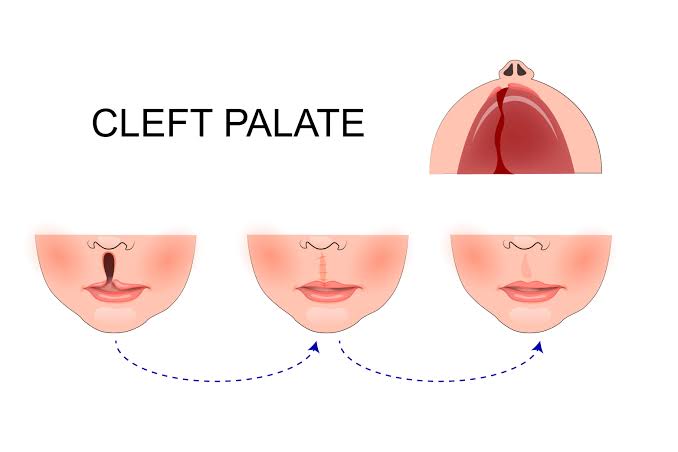
Overview
The palate, or roof of the mouth, separates the oral cavity from the nasal cavity.
During fetal development, the different parts of the palate form and join together. When this fusion is incomplete, an opening remains between the mouth and nose, resulting in a cleft palate.
The cleft may involve only the soft palate at the back of the mouth or extend forward through the hard palate. It can occur with cleft lip or without it.
Cleft palate can affect:
• Feeding during early infancy.
• Movement of liquids between the mouth and nose.
• Palatal muscle function during speech.
• Middle-ear function and hearing.
• Dental and jaw development in some children.
Care therefore usually involves an individualized long-term plan rather than surgery alone.
A congenital opening in the tissues of the roof of the mouth
Specialized feeding techniques or bottles may be needed
Usually during or around the first year according to the child's needs
May include speech, hearing, dental and growth assessment
What is Cleft Palate?
The roof of the mouth consists of a hard front portion and a soft back portion containing muscles that are important for swallowing and speech.
With cleft palate, the tissues of the palate do not join completely during fetal development.
The appearance and extent vary.
A cleft may involve:
• The soft palate only.
• The soft palate and part of the hard palate.
• Most or all of the palate.
• The palate together with a cleft involving the lip or gum line.
Some children have a submucous cleft, in which the underlying palate and muscles are affected but the cleft is covered by the lining of the mouth and may not be immediately obvious.
Identifying the type and extent of the cleft helps guide treatment and follow-up.
Causes
For most children, there is no single identifiable cause of cleft palate.
Orofacial clefts occur when tissues that normally join during early pregnancy do not completely fuse.
Development is thought to be influenced by a combination of factors, including:
• Genetic factors.
• Factors affecting fetal development.
• Certain environmental or maternal health factors during pregnancy.
Cleft palate may occur as an isolated difference or can be associated with a genetic syndrome or another condition in some children.
The presence of a cleft does not automatically mean that another condition is present, but further assessment may be recommended when additional findings are identified.
Feeding After Birth
A baby with cleft palate may have difficulty creating enough suction inside the mouth because the opening connects the mouth and nasal cavity.
Feeding may therefore take longer or require specialized equipment to help the baby receive an adequate amount of milk.
Some infants may benefit from:
• Bottles or nipples designed for babies with cleft palate.
• A more upright feeding position.
• Planned pauses during feeding.
• Regular weight and growth monitoring.
• Support from a feeding specialist or cleft and craniofacial team.
A small amount of milk coming through the nose during feeding can occur because of the cleft and does not by itself mean that the baby is choking.
The main goal is to ensure safe and effective nutrition and appropriate growth.
Diagnosis and Assessment
Cleft palate is usually diagnosed after birth by examination of the mouth.
Assessment includes:
• The location and extent of the cleft.
• Involvement of the hard and soft palate.
• Whether cleft lip or an alveolar cleft is also present.
• Feeding ability.
• Growth and weight gain.
• Any other associated congenital findings.
A submucous cleft can be more difficult to identify and may be recognized later when problems such as abnormal speech or nasal escape become apparent.
Evaluation extends beyond the physical cleft itself.
Long-term assessment may include:
• Hearing and middle-ear function.
• Speech and language development.
• Teeth and jaw growth.
• Feeding and nutrition.
• Other medical or genetic needs when appropriate.
Treatment
Cleft palate is usually repaired surgically.
The goal is not simply to close the visible opening.
Repair aims to reconstruct the roof of the mouth and reposition the palatal muscles so that the mouth and nose are separated and the palate can function more effectively during speech and swallowing.
The timing of repair varies according to:
• The type and extent of the cleft.
• The child's growth and weight.
• Overall health.
• Associated conditions.
• The treatment protocol of the cleft team.
Palate repair is commonly performed during or around the first year of life. Many cleft programs perform primary repair within an approximate range of 9 to 18 months, with the aim of completing repair before significant speech development whenever possible.
Several surgical techniques can be used. The surgeon selects the approach according to the cleft anatomy, available tissues and the child's individual needs.
Some children may require additional procedures later in childhood for speech-related palatal function, a persistent opening between the mouth and nose, dental development or jaw growth.
The need for a later procedure does not necessarily mean that the initial repair failed. Treatment needs can evolve as the child grows.
Hearing, Speech and Long-term Care
Children with cleft palate have an increased tendency to develop middle-ear fluid and ear problems that can affect hearing.
Hearing surveillance is therefore an important part of care.
Assessment by an ENT specialist or audiologist may be required, and ventilation tubes may be considered for selected children according to their hearing and middle-ear findings.
Speech development also requires follow-up after palate repair.
Surgical reconstruction of the palatal muscles helps create the closure between the mouth and nose needed during speech, but some children may still require:
• Regular speech assessment.
• Speech and language therapy.
• Further evaluation of palatal function if excessive nasal airflow or abnormal resonance persists.
Children whose cleft involves the gum line may also require long-term dental and orthodontic care as they grow.
Cleft palate care is therefore best viewed as a treatment and follow-up journey through childhood rather than a single operation.
Before Surgery
Before cleft palate repair, the child is assessed to confirm readiness for surgery and anesthesia and to review growth and any associated medical conditions.
Parents should follow the medical team's instructions regarding fasting and medications.
The surgical team should be informed if the child:
• Develops a fever.
• Has a new cough or respiratory infection.
• Takes regular medication.
• Has medication allergies.
• Has a known bleeding problem.
• Has another medical condition that may affect anesthesia.
Before surgery, parents can discuss:
• The type of cleft.
• The planned repair technique.
• Functional goals of surgery.
• The feeding plan after surgery.
• Pain control.
• Oral care.
• Follow-up requirements.
• Hearing and speech follow-up after repair.
After Surgery and Follow-up
After cleft palate repair, the child is monitored to ensure comfortable breathing, adequate feeding and appropriate pain control.
Some swelling and oral discomfort are expected during early recovery. A small amount of blood-stained drainage from the mouth or nose may also occur depending on the operation and the treating team's instructions.
Parents should follow the surgeon's guidance regarding:
• Permitted foods and fluids.
• Feeding method.
• Medication and pain relief.
• Oral care.
• Bathing and activity.
• Objects that should be kept out of the mouth during healing.
Hard or sharp foods, toys or utensils that could contact the surgical site may need to be avoided until the palate has healed sufficiently.
The medical team should be contacted, or urgent assessment sought, if the child develops:
• Difficulty breathing.
• Significant or persistent bleeding.
• Inability to drink enough fluids.
• Signs of dehydration.
• Repeated vomiting.
• Significant or persistent fever.
• Severe pain that is not controlled by prescribed treatment.
• Unusual discharge or odor together with deterioration in the child's condition.
• Any sudden change that concerns the family.
After the surgical site heals, continued follow-up evaluates speech, hearing, growth and dental development according to the child's individual needs.
Frequently Asked Questions
Is cleft palate the same as cleft lip?
No. Cleft palate affects the roof of the mouth, while cleft lip is an opening in the upper lip. Either condition can occur alone, or both can occur together.
Can a baby with cleft palate feed normally?
Babies with cleft palate can receive adequate nutrition, but the opening may make it difficult to generate normal suction. Specialized bottles, feeding techniques and growth monitoring may therefore be needed.
When is cleft palate repaired?
Timing varies according to the child and the treatment team. Repair is commonly performed during or around the first year of life, with many programs operating approximately between 9 and 18 months before significant speech development.
Does surgery simply close the opening?
No. Cleft palate repair also aims to reconstruct and reposition the palatal muscles so they can function more effectively during speech and swallowing while separating the mouth from the nose.
Can cleft palate affect hearing?
Yes. Children with cleft palate are more prone to middle-ear fluid and related hearing problems, so hearing surveillance is an important part of long-term care.
Will my child need speech therapy?
Not every child has the same needs. Speech development is monitored after repair, and some children require speech and language therapy or further assessment if difficulties develop.
Will additional surgery be needed later?
Some children require only primary palate repair and follow-up, while others may need additional procedures for palatal function, a persistent opening, dental or jaw development, or speech. This depends on the cleft and how the child develops.
Can a child with cleft palate live a normal life?
Yes. With appropriate treatment and follow-up, most children with cleft palate can grow, learn and live healthy lives, with speech, hearing or dental needs managed as they develop.
Book Your Consultation
If your child was born with a cleft palate or you have questions about feeding, timing of repair or long-term follow-up, you can book a consultation to assess the cleft and plan appropriate care.