Chronic Constipation
Chronic constipation in children is very common and usually functional rather than caused by an anatomical defect. Repeated painful bowel movements often lead to stool withholding, fecal impaction and involuntary soiling, creating a cycle that requires structured medical management and patience.
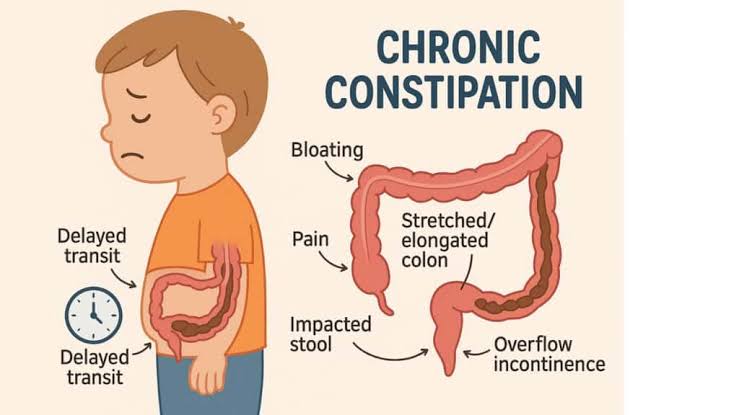
Overview
Constipation is common during childhood.
In most affected children, there is no structural blockage or anatomical bowel abnormality. This is known as functional constipation.
The problem may begin after a painful bowel movement.
The child then starts withholding stool to avoid another painful experience. Stool remains in the colon longer, loses more water and becomes larger and harder.
The next bowel movement becomes even more painful, reinforcing the withholding cycle.
When this continues, the rectum can stretch and hold a large amount of stool.
Softer stool may then leak around the retained mass and soil the child's underwear without full awareness or control.
Effective treatment breaks this cycle and continues long enough for comfortable, regular bowel habits to become established.
Hard, painful stools or repeated stool withholding
Usually based on history and physical examination
Disimpaction when needed followed by maintenance therapy
Reserved for selected cases and not routine treatment
What is Chronic Constipation?
Constipation is not determined by stool frequency alone.
A child may have constipation when repeatedly experiencing:
- Hard or dry stools.
- Painful bowel movements.
- Very large stools.
- Long intervals between bowel movements.
- Obvious stool-withholding behavior.
- A feeling of incomplete evacuation.
- A large amount of retained stool in the rectum.
- Involuntary stool leakage after toilet training.
In functional constipation, the bowel is structurally normal, but repeated withholding and stool accumulation keep the problem going.
A child who stands on tiptoes, stiffens the body, crosses the legs or hides when the urge to defecate occurs may appear to be straining to pass stool but may actually be trying to hold it in.
Causes and Contributing Factors
Most chronic constipation in children is functional and is not caused by a serious disease.
Factors that can trigger or worsen the cycle include:
- A painful bowel movement or anal fissure followed by fear of passing stool.
- Toilet training.
- Avoiding school or public toilets.
- Changes in routine or travel.
- Repeatedly ignoring the urge to defecate.
- Changes in diet or fluid intake.
- Reduced activity in some children.
- Certain medications.
- Behavioral or sensory difficulties that make toileting more challenging.
Constipation should not automatically be blamed on diet alone.
Less common organic causes need to be considered when warning signs are present.
These can include:
- Hirschsprung disease.
- Congenital anorectal abnormalities.
- Certain spinal cord or neurological disorders.
- Hypothyroidism.
- Celiac disease in selected children.
- Certain metabolic disorders or medications.
Symptoms
A child with constipation may develop:
- Hard or unusually large stools.
- Pain during bowel movements.
- Infrequent bowel movements or long gaps between stools.
- Repeated stool-withholding behavior.
- Abdominal pain or bloating.
- Reduced appetite when a large stool burden is present.
- Anal pain or fissures.
- A small amount of bright red blood associated with a fissure in some cases.
- Stool leakage into underwear.
- Repeated stool marks in underwear.
Constipation can also coexist with urinary symptoms such as wetting or worsening bladder symptoms in some children because a stool-filled rectum can affect bladder function.
Stool leakage is not necessarily deliberate behavior. Softer stool can pass around a large retained mass in the rectum and leak without the child having normal control over it.
Warning Signs Requiring Further Assessment
Most constipation is functional, but certain features prompt evaluation for another cause.
Important warning signs include:
- Constipation beginning during the first weeks of life.
- Delayed passage of meconium after birth, particularly beyond 48 hours in a full-term newborn.
- Green or bilious vomiting.
- Severe or persistent abdominal distension.
- Poor weight gain or weight loss.
- Fever or significant deterioration in general condition.
- An abnormal appearance or position of the anus.
- Weakness or neurological abnormalities involving the legs.
- Abnormal findings over the lower spine or sacral area together with neurological symptoms.
- Blood in the stool that cannot be explained by an anal fissure.
- Severe symptoms that do not improve despite an appropriate and consistently followed treatment plan.
The presence of one of these features does not automatically establish a serious diagnosis, but it means the child requires broader assessment rather than being assumed to have simple functional constipation.
Diagnosis
In most children with a typical pattern of functional constipation, diagnosis is based on the medical history and physical examination.
The clinician may ask about:
- Stool frequency.
- Stool consistency and size.
- Pain or bleeding.
- Stool withholding.
- Soiling.
- When symptoms began.
- Toilet training.
- Diet and fluid intake.
- Medications.
- Growth and development.
- Previous illnesses or operations.
Examination may include the abdomen and perianal area when appropriate, together with assessment of growth and signs suggesting a neurological or congenital cause.
Not every child with constipation requires an abdominal X-ray, blood tests or ultrasound.
Ultrasound is not routinely used to diagnose functional constipation.
Additional investigations may be required when warning signs are present, symptoms are unusually severe or appropriate treatment has not been successful.
The type of investigation is selected according to the suspected underlying problem.
Treatment
Treatment of chronic constipation requires a structured plan rather than treatment for only a few days.
Management may involve several stages.
First: Treating Fecal Impaction
When a large amount of stool has accumulated in the rectum, this should usually be cleared first.
Appropriate laxative treatment is used under medical guidance.
Polyethylene glycol, or PEG, also known as macrogol, is commonly used as a first-line option for both disimpaction and subsequent maintenance treatment.
The appropriate regimen depends on the child's age and clinical situation and should be prescribed by the treating clinician.
Second: Maintenance Treatment
Once retained stool has been cleared, treatment continues with the goal of keeping bowel movements soft and comfortable and preventing reaccumulation.
Maintenance treatment may be required for several months and sometimes longer depending on the child's response.
Medication should not simply be stopped as soon as symptoms improve.
Treatment is usually reduced gradually once bowel habits have remained stable and according to medical guidance.
Third: Toileting Routine
A regular bowel habit can be encouraged by:
- Sitting on the toilet routinely, particularly after meals.
- Using a foot support so the child's feet are stable.
- Avoiding pressure, punishment or embarrassment.
- Using age-appropriate encouragement and rewards.
- Responding to the urge to pass stool rather than repeatedly delaying it.
Fourth: Diet and Fluids
Children need age-appropriate amounts of dietary fiber and fluids.
Excessive fiber or very large amounts of water do not by themselves treat established chronic constipation with stool withholding and fecal retention.
Medication and a structured toileting routine remain important when clinically required.
When is Surgical Assessment Needed?
Surgery is not the usual treatment for functional constipation.
Most children improve with medical treatment, toileting support and follow-up.
Specialist or surgical assessment may be required when there is:
- Suspicion of Hirschsprung disease.
- A congenital anorectal abnormality.
- A neurological or structural problem affecting defecation.
- Severe persistent constipation despite an adequate course of medical and behavioral treatment.
- Severe colorectal dysfunction requiring multidisciplinary assessment.
When Hirschsprung disease is suspected, specialized investigations may be needed, and rectal biopsy may form part of the diagnostic process when indicated by the specialist team.
Children with severe treatment-resistant constipation may undergo specialist assessment of colorectal and anorectal function before advanced procedures are considered.
Selected patients with severe refractory disease may benefit from procedures designed to assist colonic emptying, such as an antegrade continence enema pathway, or from other individualized colorectal surgery.
These interventions are reserved for carefully selected cases after comprehensive evaluation and are not routine treatments for childhood constipation.
Before Any Surgical Intervention
Before surgery or another advanced intervention is considered, it is important to confirm the underlying problem and review the treatment already attempted.
Assessment may include:
- Duration and severity of constipation.
- Whether appropriate disimpaction and maintenance treatment has been used consistently.
- Stool-withholding and toileting behavior.
- Growth and nutritional status.
- Examination of the anorectal area.
- Evaluation for congenital or neurological abnormalities.
- Specialized colorectal or motility testing when indicated.
- Assessment for Hirschsprung disease or another organic cause.
Decisions about surgery for severe constipation should involve multidisciplinary assessment whenever appropriate.
When an operation or procedure is selected, the family should understand:
- The goal of the procedure.
- Available alternatives.
- Expected postoperative management.
- Whether a bowel-management program will still be required.
- Potential complications.
- Long-term follow-up.
After Intervention and Follow-up
Follow-up after an intervention for severe constipation depends on the underlying diagnosis and the procedure performed.
Even after some surgical procedures, a child may continue to require a structured bowel-management program.
This can include:
- Scheduled bowel emptying.
- Medication or bowel irrigation depending on the condition.
- Nutritional and fluid guidance.
- Toileting routines.
- Assessment of continence.
- Monitoring growth and quality of life.
- Adjustment of the plan as the child grows.
Families should follow the treating team's instructions regarding wounds, diet, activity and bowel management.
After a surgical procedure, the medical team should be contacted if the child develops:
- Severe or increasing abdominal pain.
- Marked or worsening abdominal distension.
- Repeated or green vomiting.
- Significant fever.
- Unusual bleeding.
- Increasing redness, swelling or drainage from a wound.
- Failure to pass stool or gas together with other concerning symptoms.
- Clear deterioration in the child's general condition.
Long-term management aims not simply to increase stool frequency but to achieve comfortable and predictable bowel emptying, reduce pain and soiling, and improve the child's daily quality of life.
Frequently Asked Questions
Does a child need to have a bowel movement every day to be normal?
No. Normal stool frequency varies between children. More important features are whether stools are soft and comfortable to pass and whether significant withholding or other constipation symptoms are present.
Can my child be constipated even if they still pass stool?
Yes. A child may pass small amounts while a large stool mass remains in the rectum, or may have relatively frequent bowel movements that are consistently hard, large or painful.
Why does stool leak into my child's underwear?
When a large amount of stool is retained, the rectum can become stretched and softer stool may pass around the retained mass and leak without normal control. This should not automatically be interpreted as deliberate behavior.
Can diet alone treat chronic constipation?
Not always. Adequate fiber and fluids are important, but established constipation with withholding and fecal retention often requires disimpaction, maintenance treatment and a structured toileting routine.
Does my child need an abdominal X-ray for constipation?
Usually not. Most functional constipation can be diagnosed from the history and examination. Imaging and laboratory tests are used selectively when symptoms are unusual, warning signs are present or treatment has not been effective.
Is long-term laxative treatment harmful?
Constipation medication can be used for extended periods when clinically necessary and supervised appropriately. Some children require treatment for many months or longer to prevent reaccumulation, and medication is generally reduced gradually rather than stopped abruptly.
When should Hirschsprung disease be suspected?
Concern is greater when constipation begins during the newborn period, meconium passage is delayed, or there is significant abdominal distension, bilious vomiting, poor growth or other unusual clinical features. Specialist assessment is required to establish the diagnosis.
Does chronic constipation require surgery?
Rarely. Most childhood constipation is treated without surgery. Surgical treatment is considered only when a specific surgical cause is identified or severe constipation remains refractory despite comprehensive specialist management.
Book Your Consultation
If your child has persistent constipation, painful bowel movements, repeated stool withholding or involuntary soiling, you can book a consultation to assess the cause and develop an appropriate treatment and follow-up plan.
Video Presentation
Video presentation coming soon